Stump grinding across County Durham

Stump grinding in County Durham

Tree gone, stump still in the way? We grind unwanted stumps below the surface, with the depth, access and finish agreed around how you want to use the space.

Existing stumps or after tree removal

You don’t need to know the trade name. Just tell us what you want to change.

Send stump and access photos on WhatsApp
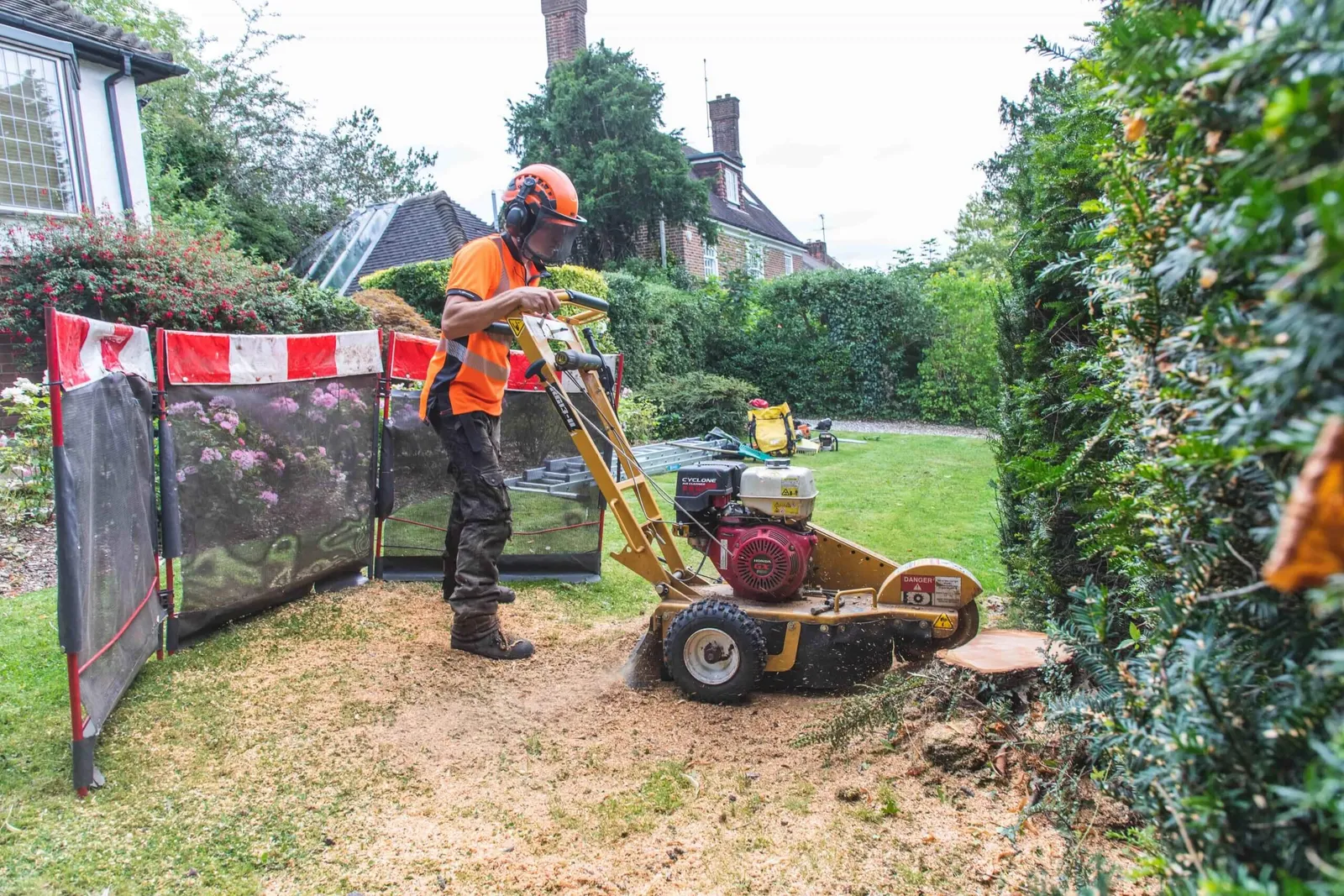
Sharp Hedges stump grinding in a garden, with a protective screen beside the machine

Understand the result

How stump grinding works

A stump gets in the way of mowing, planting or simply using a corner of the garden, and most will keep throwing up shoots. Cutting it close to the ground leaves the solid base of the tree in place.

A stump grinder is a machine with a toothed wheel that chews the stump into chips, working down to the agreed depth below ground level. It is quicker, cleaner and far less disruptive than digging the whole root system out, which is what “stump removal” strictly means and which most gardens never need.

We grind stumps across County Durham and the North East, including Durham, Darlington, Bishop Auckland, Newton Aycliffe, Spennymoor and Sedgefield. See all the areas we cover.

The visible stump
Ground away rather than just cut lower with a saw, so nothing stands proud of the ground.
Wood below ground
Grinding continues within the agreed area and depth, subject to the site conditions, so you can turf, plant or build over the spot.
Roots beyond that area
Roots outside the grinding area stay in the ground and rot away over the years. Digging out the full root system is a different job.

Under the lawn

What grinding takes out and what stays

The ground is cut away in this drawing so you can see the roots. Choose how much to grind, what happens to the grindings and what goes on top, and see what is left.

A tree stump and its roots under a lawnA garden cut away at the front edge of the lawn: a tree stump cut close to the ground, with its roots spreading out through the soil beneath it and one root running along just under the grass. A garden spade stands in the lawn for scale. Before grinding. The stump are marked to be ground out.Ground outLeft in the groundGrindingsLeft to rot awayOpen holeLeft to rot awayTopsoilLeft to rot away
A stump cut close to the ground, with its roots under the lawn. The dashed line shows the area stump grinding takes out; the roots beyond it stay in the ground.

  • What is ground outThe stump and the wood just below it, inside the area and depth agreed for the job. Roots outside that area stay in the ground and rot away over the years.
  • Surface rootsRoots running along the surface and lifting the lawn can be ground out along their length as well. Roots further down, under the ground, are left. Point them out when you ask for a quote.
  • The grindingsGrinding leaves a mix of chipped wood and soil, usually more than people expect. It can go back in the hole or be taken away. Before turf, seed or planting, most of it needs taking out.
  • What goes on topIf you ask for it, we can fill the hole with topsoil and lay turf or sow seed, as part of the quote. For a lawn, a few inches below the surface is usually enough. For a new planting bed we grind deeper and wider.

Every stump is different. The drawing is a guide. We agree the area, the depth and what happens to the grindings when we quote, after seeing the stump and what is around it.

Our work

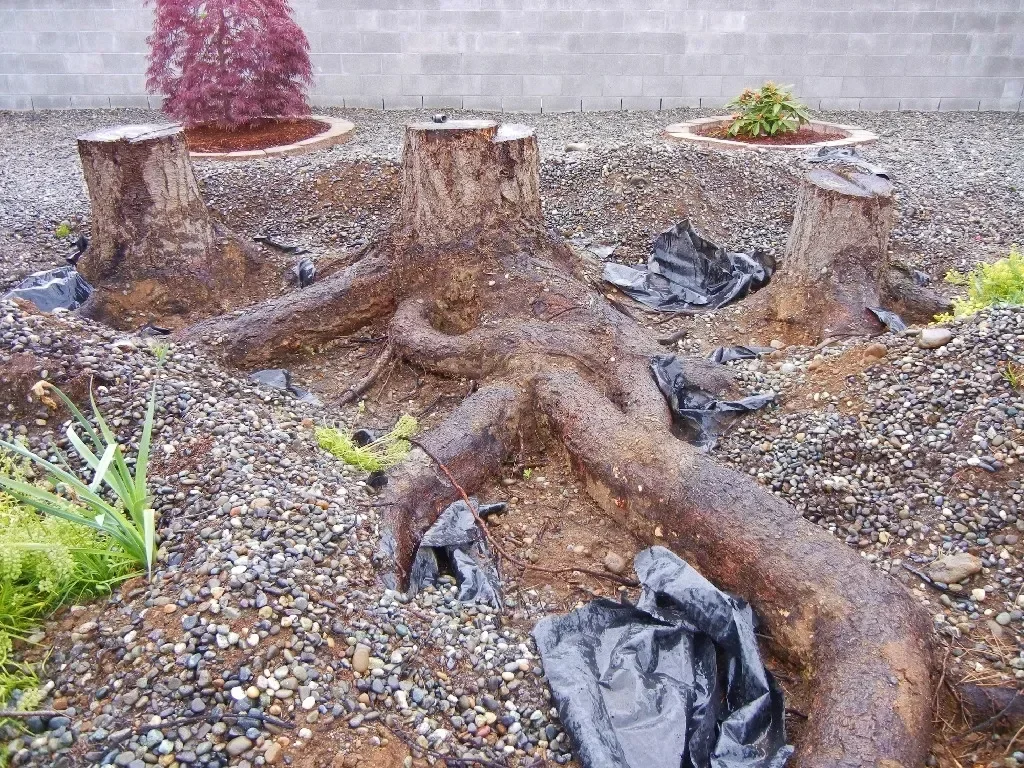
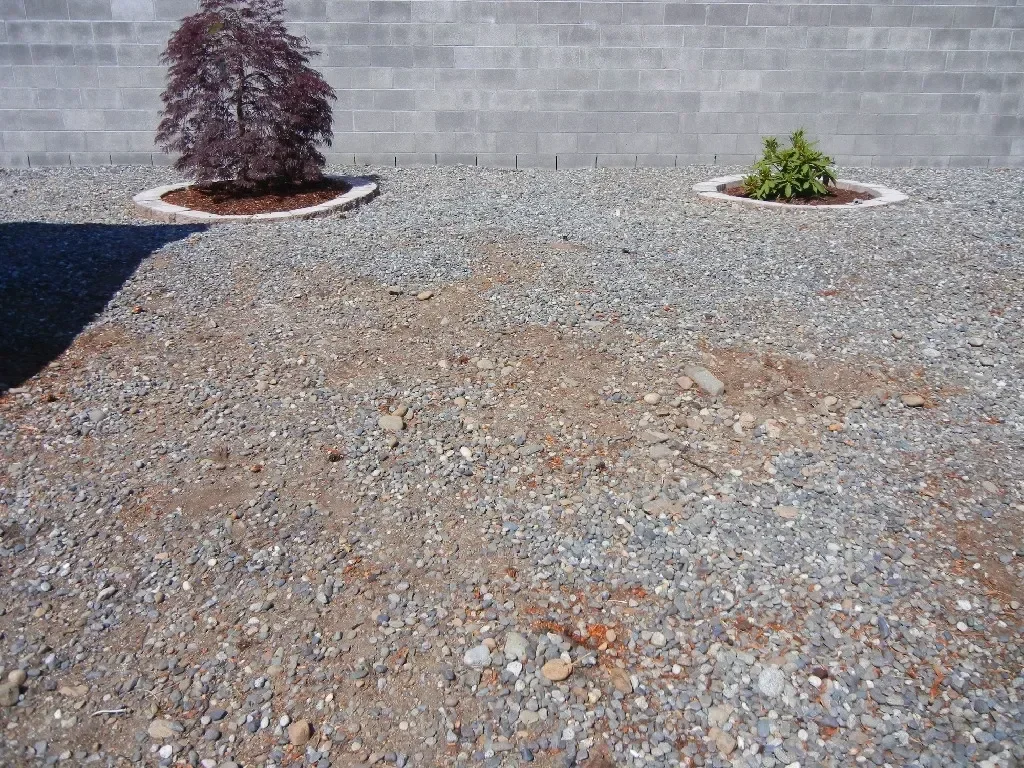
Three stumps ground out of one garden

The same Newton Aycliffe gravel bed before and after grinding. The projecting wood is gone; the depth and finish for your own garden are agreed when we quote.

BeforeAfter

Matching before and after photographs of the same gravel bed: three raised stumps and exposed roots before grinding, and a clear gravel surface afterwards.

Drag the divider: raised stumps and exposed wood before, a clearer surface after grinding. Roots beyond the agreed grinding area remain below ground.

This matching pair and the worksite photograph above record separate Newton Aycliffe jobs. See our Newton Aycliffe service page.

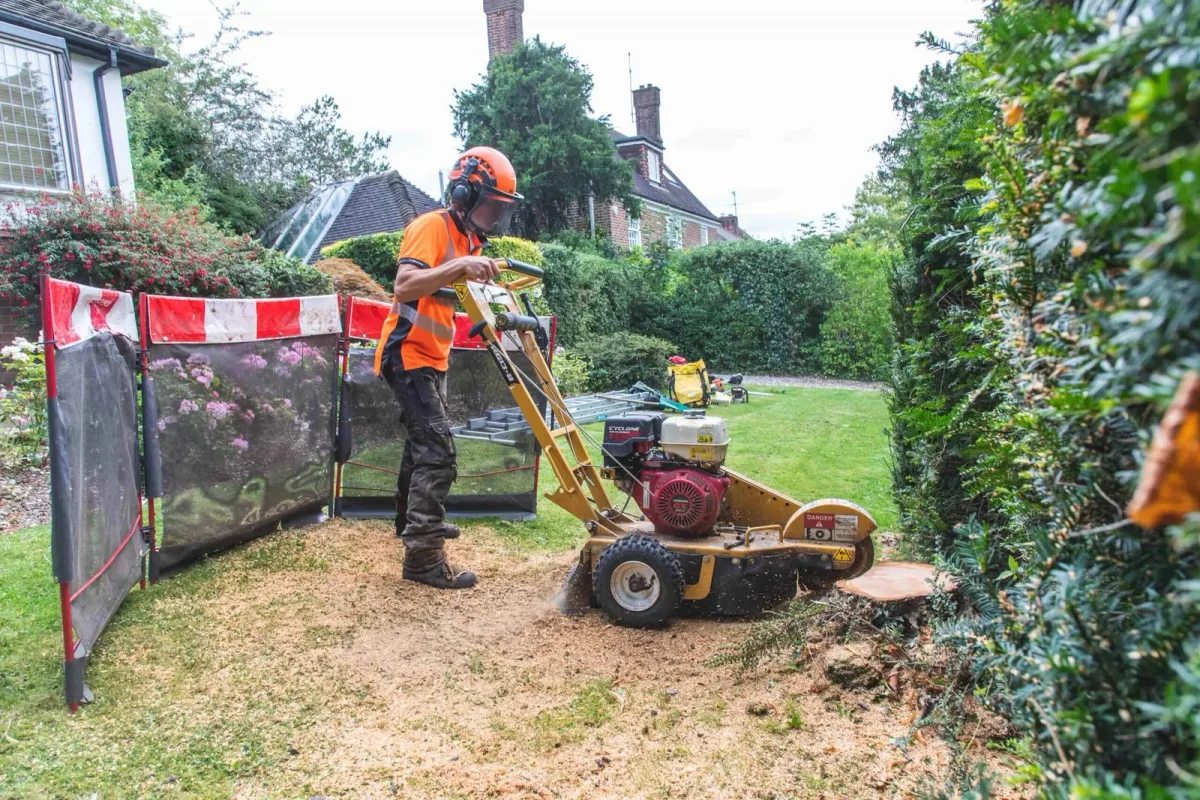
Operator using a stump grinder beside a lawn with protective screens around the work area
Screens up around the grinder on another Newton Aycliffe job. Grinding throws chips a long way, so the lawn and anything nearby are shielded first.

On the day

Screened, ground down and tidied

A stump grinder is a powerful machine and the chips fly. We put screens around the working area where windows, cars, planting or a neighbour’s garden are close, and keep people and pets clear while the machine is running.

Once the stump is down to the agreed depth, the grindings are either left in the hole, spread, or taken away, whichever we have agreed. How long it takes depends on the size of the stump and how hard the wood is.

Grinding a stump is often the last part of a bigger job. If the tree is still standing, see tree removal; if you are clearing the whole garden, our garden clearance page covers that.

Start with the next step

What will you use the space for?

The right grinding depth depends on what you want to do next. Tell us your plans before we price the work, especially if someone else will be landscaping afterwards.

01

Lawn or a clearer garden

Tell us where you want the finished ground level to be. Grinding a few inches below the surface is usually enough for soil and turf to go back over the top, and we can say what clearing, soil or surface work will still be needed afterwards.

02

A new planting space

A new plant needs room for its roots. Share what you hope to plant and where, so we can consider the width as well as the depth of grinding. Remaining roots and the condition of the ground may affect the options.

03

Paving, posts or further work

If another contractor needs a particular area or depth clear, let us know before the quote. Grinding the visible stump alone does not establish that the ground is ready for a foundation, post hole or new surface.

Getting to the stump

The route in matters

The stump may be small, but the machine still needs to reach it and have room to work. Show us the whole route from the road or driveway, including the tightest point.

A photo of a wide gate alone does not show a sharp turn, steps or a narrow passage beyond it. Those details help us judge access and explain what is practical.

Ask about your stump
  1. 01

    Gates, turns and ground

    Send the narrowest clear width, plus photos of steps, slopes, tight corners and the route over lawns or paving. Access needs checking for the machine used on the job.

  2. 02

    Room around the stump

    Fences, walls, sheds, paths and neighbouring planting can affect the working space and how much of the stump is accessible.

  3. 03

    What is below ground

    Tell us about known cables, pipes, drains or other buried services near the stump. Their position must be considered before grinding; a surface photo cannot establish what is underground.

What affects the price?

Size is only part of the job

Send a close view of the stump and a wider photo showing what is around it. An approximate measurement across the widest part is more useful than calling it small or large.

If there are several stumps, include them all in the enquiry. Access, the work below ground and the finish you want all affect the quote.

  • Width, height and numberThe amount of stump wood to grind and whether there is more than one.
  • Depth and working areaHow far below ground the work needs to go for your intended use.
  • Access and surroundingsThe route in, ground conditions and space beside boundaries or structures.
  • Material and finishThe volume of grindings and what is agreed to stay or be taken away.
Get a free stump quote

County Durham and the North East

Stump grinding near you

The grinder travels with us, so one stump in a village is as welcome as several in town. Each page shows what we have done nearby.

Useful answers

Before you get in touch

Can you grind a stump left by somebody else?

Yes. Ask us to quote for an existing stump even if Sharp Hedges did not remove the tree. Send its approximate width and height, a photo of the surrounding space and details of the route into the garden. If there are other stumps, include them all; several in one visit is more economical than coming back.

How far below ground will you grind?

The depth is agreed for the job. For a lawn, a few inches below the surface is usually enough for soil and turf to go back over the top. For planting a new tree or shrub, or sinking a fence post, we grind deeper and wider. Access and anything near or beneath the stump can limit the depth, so we do not promise one depth for every site or the removal of every root.

Will the tree grow back after grinding?

Grinding removes the stump, which is where most regrowth starts, so it stops the vast majority of trees. A few species, such as poplar, willow, elm and some cherries, can send up suckers from roots left in the ground. Tell us if shoots have already appeared and, if you know it, what kind of tree was removed, and we will say what to expect.

What if the stump is close to a wall or fence?

Show us how close it is and whether any roots run beneath the boundary or paving. The machine needs room to work as well as a route to reach the stump. Nearby structures and known buried services can limit how much can be ground, so we need to check these details first.

Does the quote include taking away the grindings?

We agree the finish when quoting. Grinding leaves a mixture of chipped wood and soil, usually more than people expect. Tell us whether you want it left in the hole, spread, or removed, and whether you have further garden work planned. Removal, replacement soil and making good are only included when they are part of the agreed quote.

Is stump grinding the same as stump removal?

Not quite. Stump grinding chews the stump into chips to below ground level and leaves the wider roots to rot away naturally, which is what most gardens need. Stump removal in the strict sense means digging out the whole root plate, a much bigger job that disturbs the garden and is rarely necessary. If someone has quoted you for stump removal, check which one they mean.

5.0 from 43 Google reviews

More reviewsRead the reviews on Google

Show us the stump

Make room for what comes next

Send your postcode, the number and approximate size of the stumps, and what you want to do with the area. Photos of the stump, surrounding space and access route are useful on WhatsApp. A visit may be needed to confirm the work.

What happens next

  1. 1We look at what you send.
  2. 2We clarify the job and, for most work, arrange a free visit.
  3. 3You get your quote, with no obligation.

Prefer to talk it through?

  • Over 25 years’ experience with trees and hedges
  • NPTC qualified
  • £10m public liability
  • Speak to us directly
  • Waste removal can be included
What can we help with?

Choose as many as you need.

How many stumps?
Approximate stump diameter
Narrowest access width

For example: grind the stump below ground level so the area can be turfed or replanted.

Photos or video (optional)

Helpful photos: whole stump, diameter with an object for scale, narrowest access point.

Your uploads stay private and are only used to deal with your enquiry.

Your details

Phone or email: one is enough.

Add more detail (optional)

Send anytime. We reply between 8am and 8pm.

We use your details to handle your enquiry and any agreed work. Privacy Policy.

WhatsApp