Tree pruning · Crown reduction
Crown reduction in County Durham
Make a tree that has outgrown its space smaller all over, without cutting the top off. Each branch goes back to a suitable side branch, so it still looks like the same tree, only smaller.
NPTC qualified · Fully insured · Free in-person quotes
You don’t need to know the trade name. Just tell us what you want to change.
Send photos of your tree on WhatsApp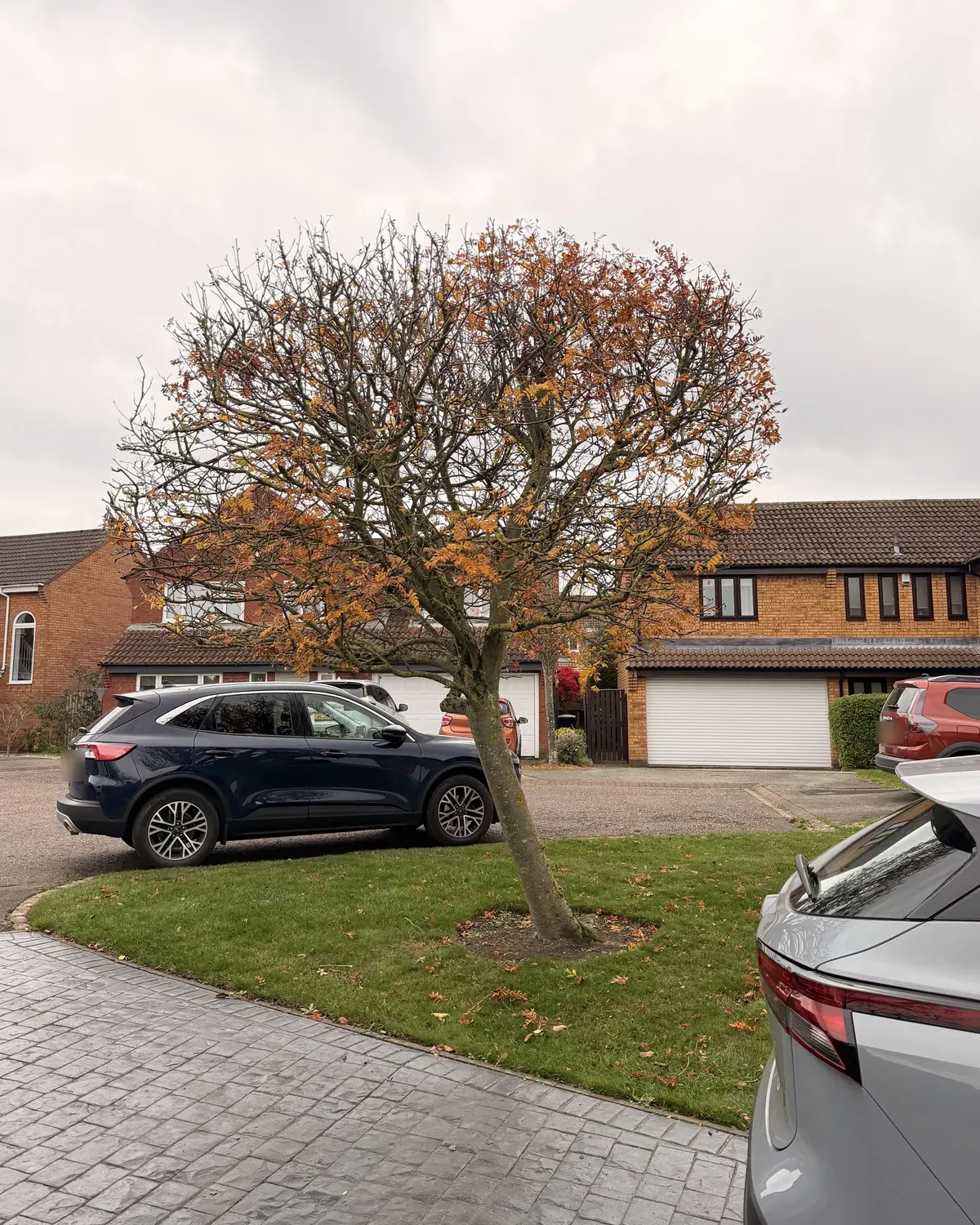
What a crown reduction is
The whole tree made smaller, not just the top
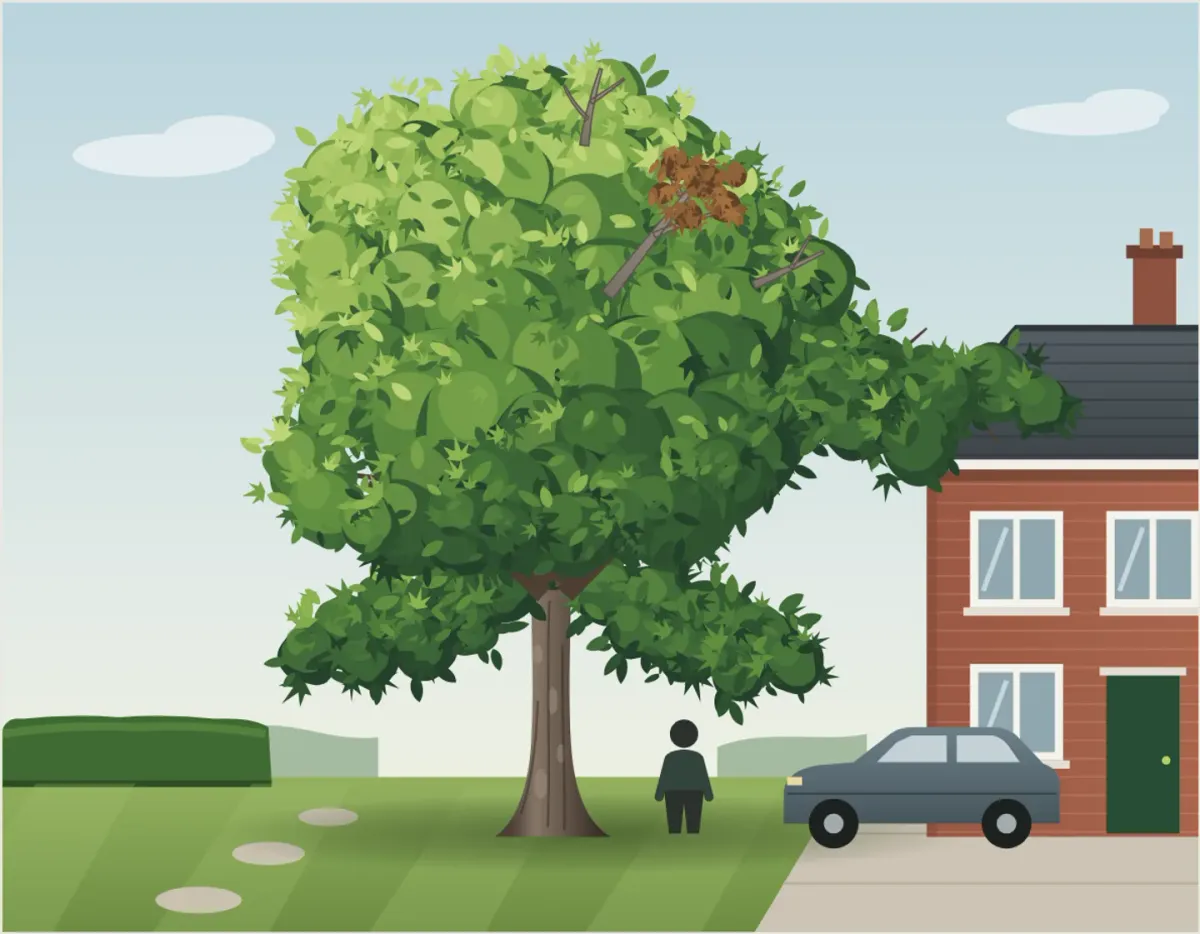
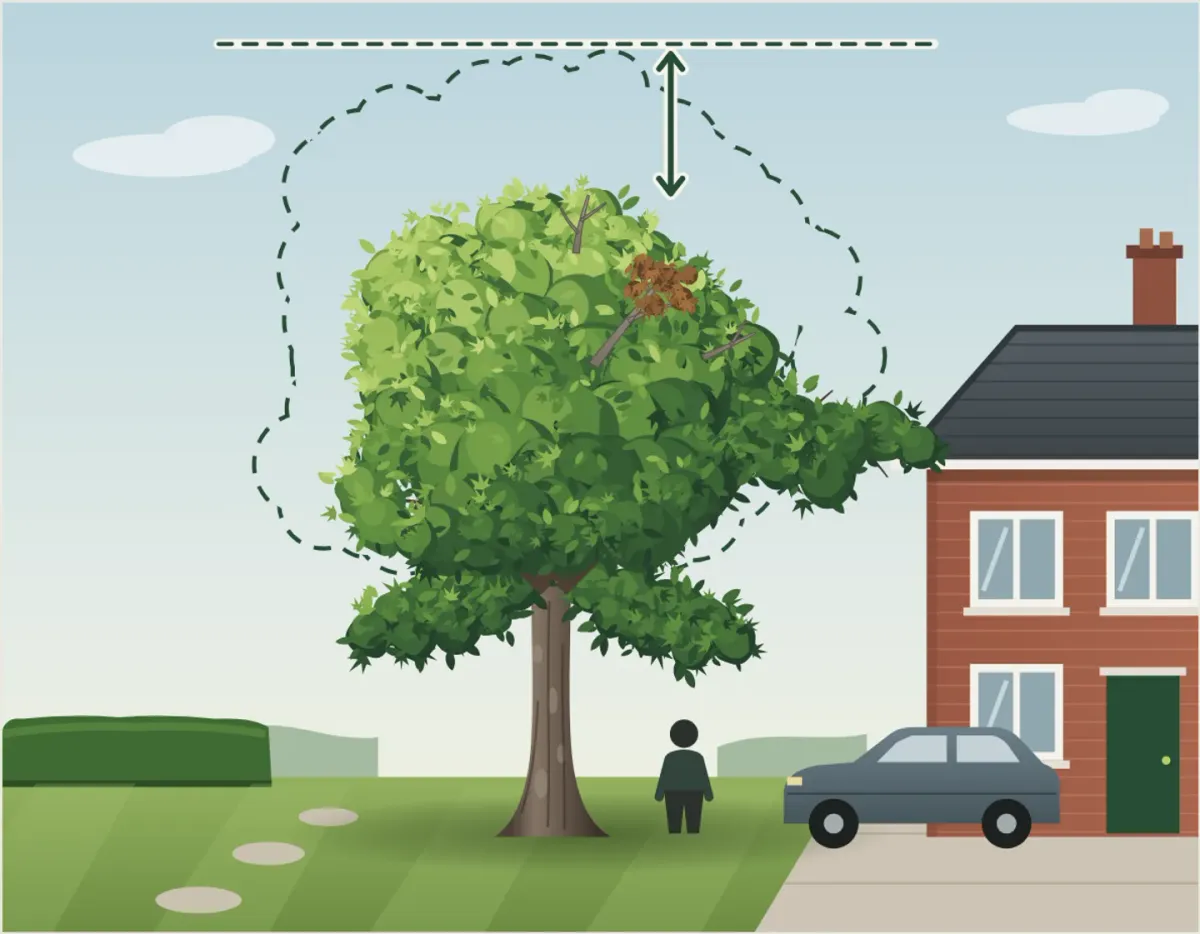
The crown is everything above the trunk: the main limbs, the smaller branches and the leaves. A crown reduction shortens the outside of it all the way round, so the tree loses height and spread but keeps the outline it grew into.
Each branch is cut back to a side branch big enough to take over as the new tip. That is what keeps the tree looking natural. It is also why we describe a reduction in metres, for example “reduce the height by about two metres and the spread by about one and a half, back to suitable side branches”, so you know exactly what you are paying for.
Topping is a different thing. It cuts straight across the main limbs at one height and leaves stumps, which sprout a mass of weak shoots and often rot. That is why we reduce rather than top.
Is it the right job?
When a reduction is the answer, and when it isn’t
A reduction is the right job for a healthy tree that has simply got too big. If the problem is in one place, or underneath, a smaller job may do it.
Usually a good fit
- The tree has outgrown the garden, but it is healthy and you would like to keep it.
- Branches are reaching the house, the neighbours or the road on more than one side.
- It casts more shade than you would like, and a smaller tree would fix that.
- Long, heavy limbs or a weak fork, where taking weight off the ends lowers the strain.
Probably not the right job
- The trouble is on one side only, such as branches over the roof. Cutting back just those branches is less work.
- You need room underneath it. That is a crown lift, and the height can stay as it is.
- You want it far smaller than it is. Cutting too hard leaves big wounds and a burst of regrowth, and removal and replanting may serve you better.
- Branches touching overhead power lines. Call 105 first: the electricity network deals with those.
Some trees take a reduction better than others. Many conifers will not grow back from bare wood, so they can only be taken back so far, and old trees cope with less than young ones. We look at the species, its condition and any earlier cuts before we suggest how much to take off.
Our crown reductions
Smaller trees that still look like trees
The tree at the top of this page is in Great Lumley, near Chester-le-Street. We reduced it all the way round in November 2026; the job page has the before photo. Here are two more.
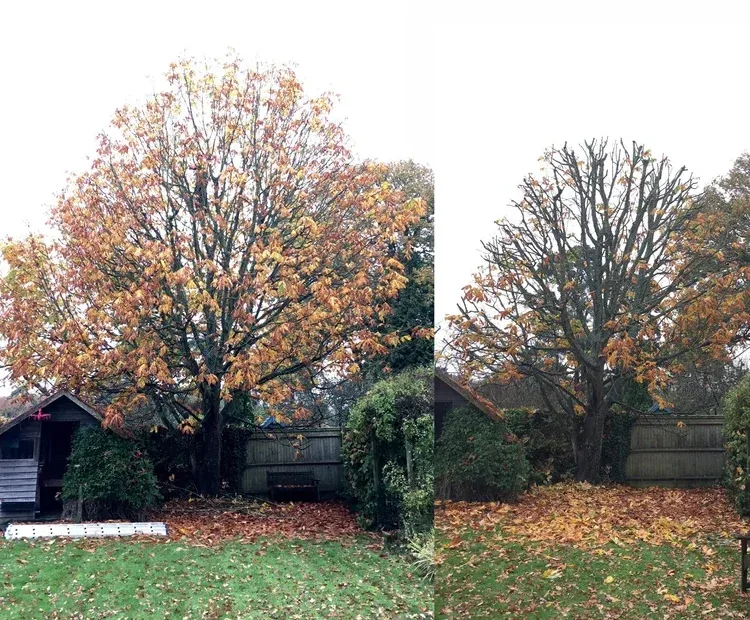
A garden tree reduced above a shed
Crown reduction
The same tree before and after, with the garden fence and shed behind it for scale. The outer canopy is smaller all round, and the trunk and main branches are as they were.
See this job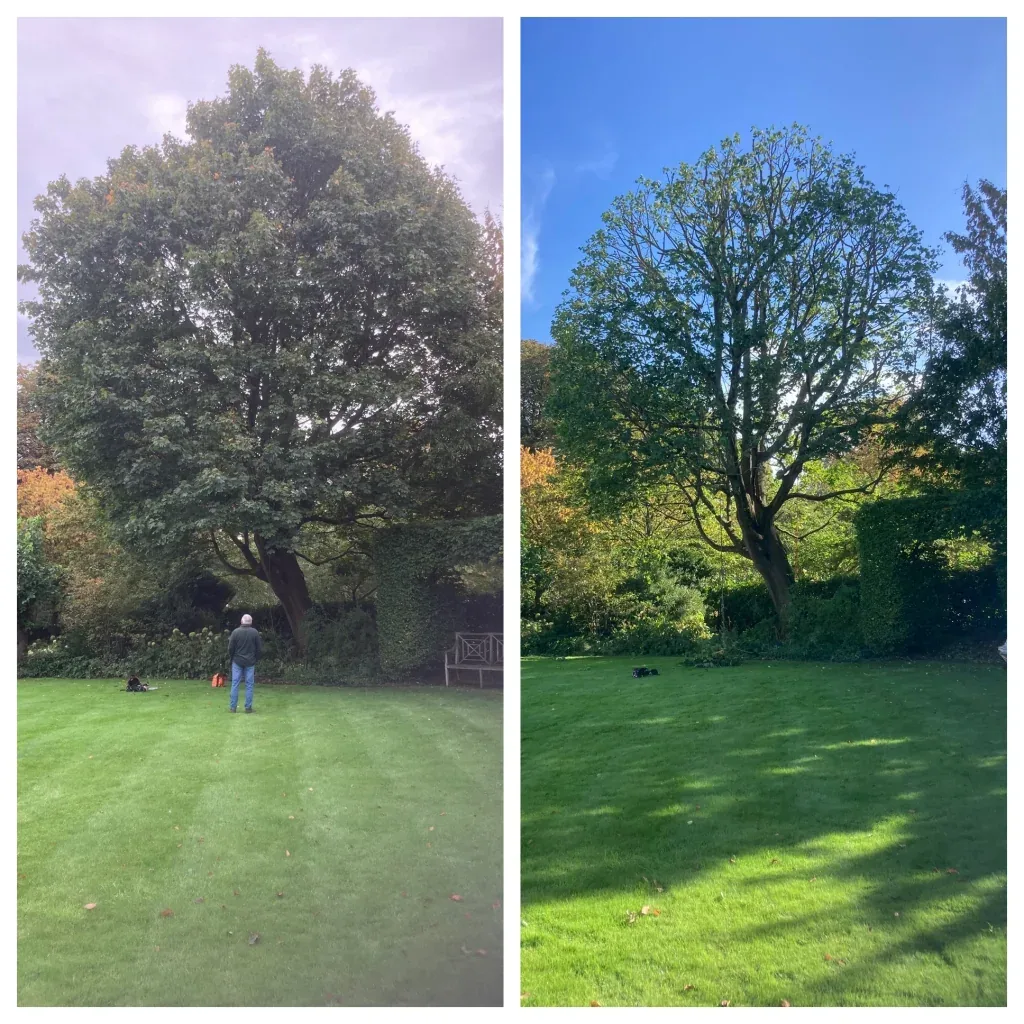
A large garden tree in Sunderland
Sunderland · Crown reduction
A big tree taken down to a smaller, lighter crown. It still looks like a tree rather than a row of stumps.
More Sunderland jobsAfterwards
What the tree looks like when we’ve finished
Straight away, the crown is smaller and rounder, and you can see a little more into it. The cut ends are small and sit just above side branches, so from the ground you should not see stumps.
In winter, a reduced broadleaved tree can look quite bare and twiggy for a few months. It fills out again when the leaves come.
Over the next few years the tree puts out new shoots near the cuts. That is normal, and it is how the tree recovers. How soon it needs another reduction depends on the species and how hard it grows, and we’ll be straight with you about that when we quote.
Timing and permission
When to book, and what to check first
A reduction is a big change for a tree, so the time of year and the paperwork both matter.
- 01
The best time of year
For most broadleaved trees, late autumn to late winter works well: the leaves are off and we can see every branch. Cherries and plums are better done in summer because of silver leaf disease, and birch and maple bleed sap if cut in late winter.
- 02
Nesting season
Between March and August we check the tree for active nests before any cutting. Nesting birds are protected by law, so an active nest means waiting until the young have flown. If you want a big reduction done before spring, autumn or winter is the time to ask.
- 03
Protected trees
A tree with a Tree Preservation Order needs the council’s consent before it is reduced, and the council has up to eight weeks to decide. In a conservation area you give the council six weeks’ notice. Our protected tree check finds your council from your postcode. The council will want the work described clearly, in metres rather than “tidy the tree”, which is how our quote describes it anyway.
On the day
What you’ll see while we work
Nothing about the day should be a surprise. This is how a reduction usually goes.
Ask about your treeWe go over the cuts with you
Before anyone climbs, we check the agreed reduction with you on the spot, and where the logs and chippings are going.
A climber works round the crown
Working from ropes and a harness, the climber cuts each branch back to its side branch, all the way round. Branches near the house, fences or plants are lowered on a rope rather than dropped.
The ground team clears as we go
Branches are cut up or chipped. Logs and chippings are taken away or left where you’ve asked, depending on what is in your quote. Expect the noise of a chainsaw and a chipper; it helps to let the neighbours know.
We tidy up and you look it over
The lawn, beds and drive are cleared as agreed, and you can look at the tree with us before we leave.
Other crown work
Not quite what your tree needs?
A reduction is often done together with one of these. If you are not sure which your tree needs, tell us what bothers you about it and we’ll suggest the work.
- Crown thinningA lighter, less dense canopy at the same size.
- Crown liftingHeadroom over a path, drive, lawn or road.
- Deadwood removalDead and broken branches out before they fall.
- PollardingCut back to the same knuckles every few years.
- All tree pruningEvery kind of work side by side, with our pruning jobs.
Useful answers
Before you get in touch
Will a crown reduction stop my tree growing?
No. A reduction makes the tree smaller for now, and it will grow back over the following years. Done properly, the regrowth is slower and better spread than after topping. Most reduced trees need doing again at some point, and we’ll tell you roughly when for your tree.
Will a reduction let more light into my garden?
Yes, mainly because the tree is smaller and casts a smaller shadow. If what you really want is light through the tree rather than a smaller tree, crown thinning may suit it better, and the two are often done together.
Can you reduce just one side of the tree?
Yes. We can cut back the branches on one side, for example over a roof or a neighbour’s garden. We try to keep the tree balanced, so if one side would end up much heavier than the other, we’ll explain the options before we start.
Is a reduction cheaper than taking the tree down?
Not always. A careful reduction on a big tree can take as long as felling a smaller one, but a removal also leaves a stump to deal with. If you’re weighing up the two, we can price both so you can compare.
Does a crown reduction harm the tree?
Every cut is a wound the tree has to seal off, so the aim is fewer, smaller cuts in the right places. Cutting back to a side branch of a good size lets the tree carry on growing from there. Big cuts into thick limbs, or taking too much off at once, are what lead to decay and stress, and that is what a proper reduction avoids.
Do I need to be at home while you work?
You don’t have to be, as long as we can get into the garden and the details have been agreed. It helps to be there at the start, so we can go over the cuts together on the spot.
5.0 from 43 Google reviews
More reviewsRead the reviews on Google“Sharp Hedges came out today, they did a great job reducing our hedge and tidying it up.”
“Only a small garden job for my tree but the service by Sharp Hedges Tree and Garden Services was first class!”
“Excellent service. From the initial call to completing the job in less than a week.”
Ask about a crown reduction
Tell us how much smaller you’d like it
Send your postcode, roughly how big the tree is and what you’d like to change. On WhatsApp, a photo of the whole tree from a distance and one of the branches that bother you is ideal. We reduce trees across County Durham and the North East.
What happens next
- 1We look at what you send.
- 2We clarify the job and, for most work, arrange a free visit.
- 3You get your quote, with no obligation.
We’ll look at the job details and reply between 8am and 8pm. If we need a closer look, we’ll arrange a suitable time with you.
Want to show us the job?