
Tree pruning · Pollarding
Tree pollarding in County Durham
Keep a tree small for good by cutting it back to the same points every few years. Started on a young tree, pollarding gives a compact tree with a framework of rounded pollard heads.
NPTC qualified · Fully insured · Free in-person quotes
You don’t need to know the trade name. Just tell us what you want to change.
Send photos of your tree on WhatsApp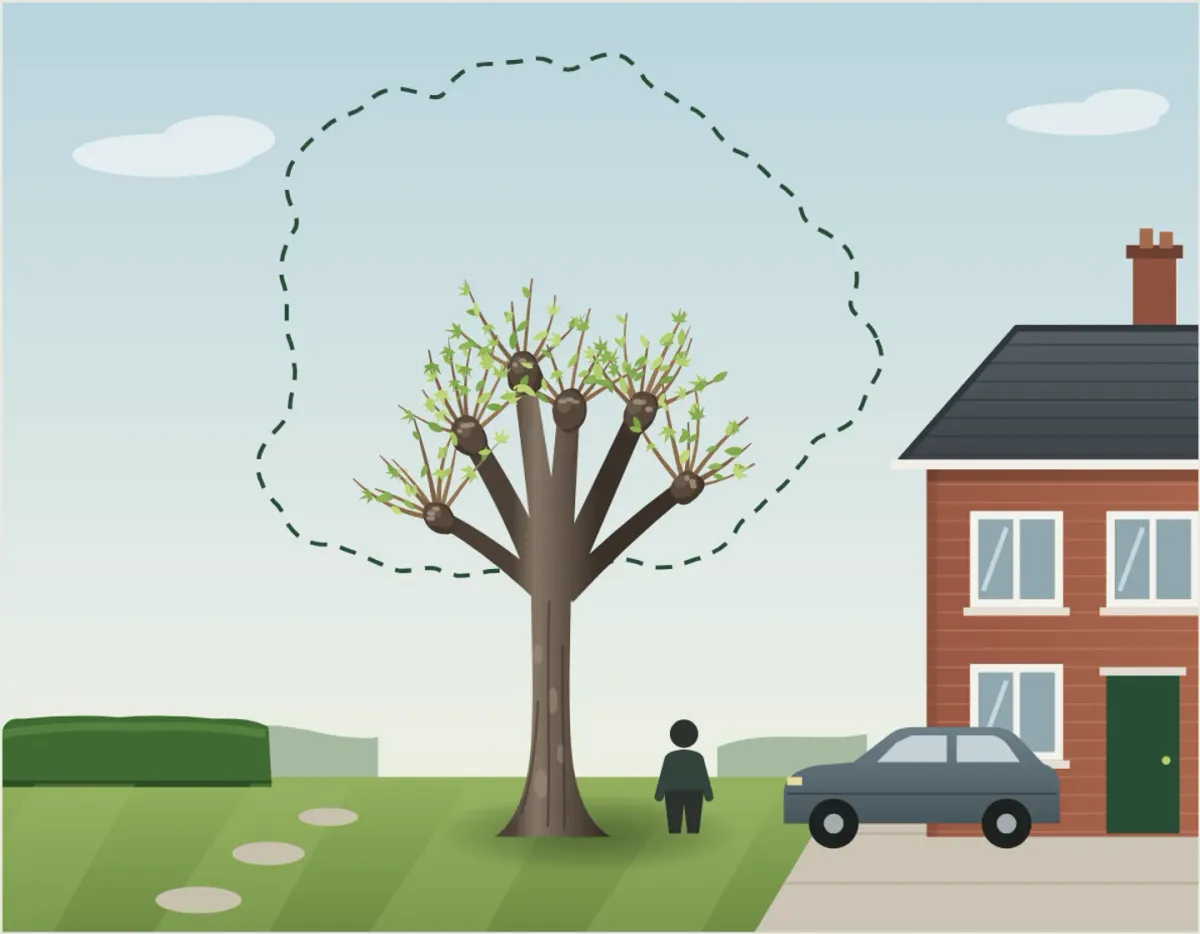
What pollarding is
Back to the same knuckles, every few years
Pollarding cuts all the branches back to the same points on the main limbs, again and again, on a regular cycle. Each time, the tree grows a fresh crop of shoots from those points, and over the years they swell into rounded pollard heads, often called knuckles.
The next cut goes back to the knuckle, not into it. The knuckle is where the tree has built up its defences against decay, so cutting through or below it does exactly the damage pollarding is meant to avoid.
It is an old way of managing trees. You will see it on street trees in towns, on willows by rivers and fields, and on garden trees kept small on purpose.
Which trees suit it
Trees that take pollarding well
Pollarding only works on trees that grow back strongly from the same points year after year. In the UK these are the usual ones.
- LimeOne of the most common pollards on British streets. It regrows strongly from the knuckles.
- WillowPollarded for centuries along rivers and ditches. It grows fast, so it needs cutting more often.
- London planeThe classic town pollard, and the reason many city streets have rows of knuckled trees.
- OthersHornbeam, mulberry and catalpa are often pollarded in gardens. Most conifers, birch and cherry are not suited to it.
Start young
Best started young, risky on an old tree
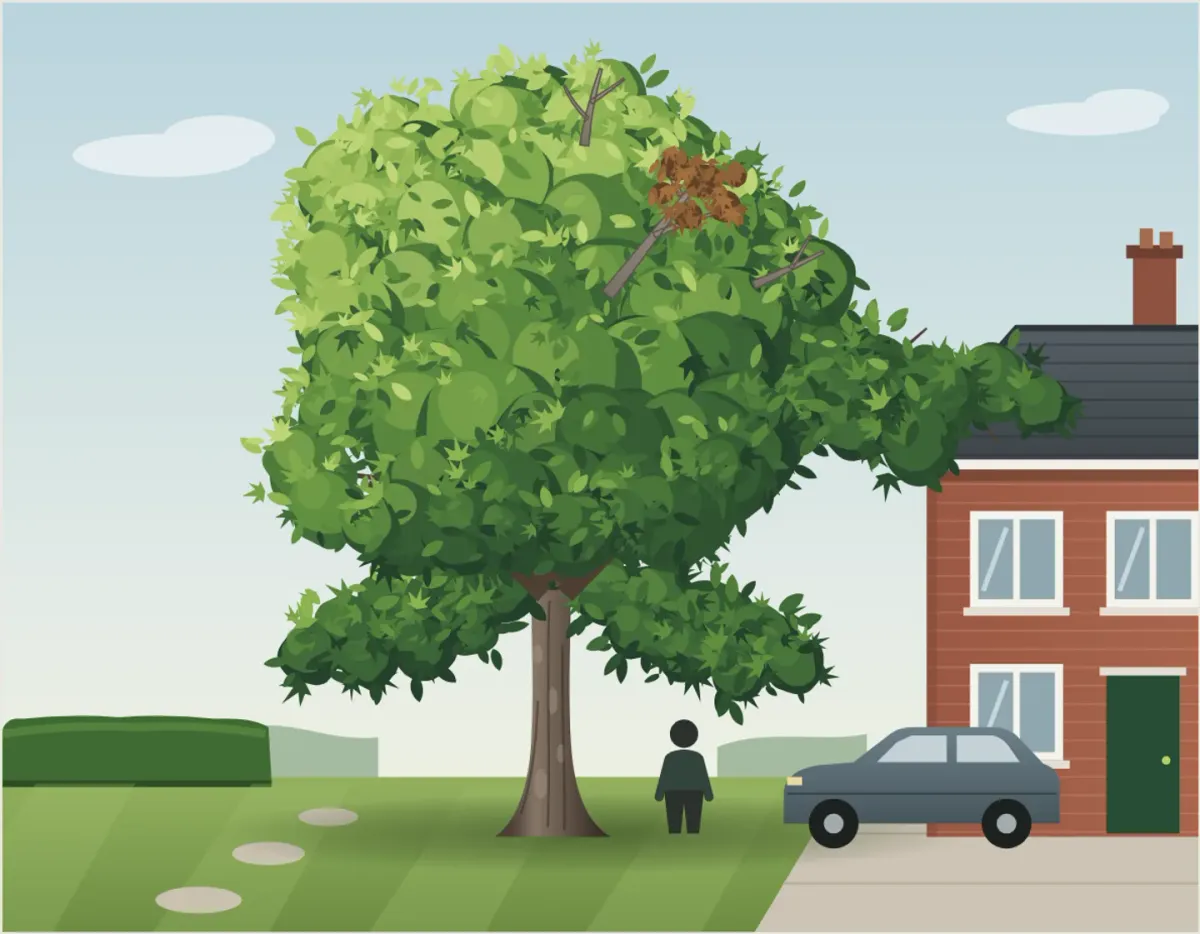
Pollarding works best when it starts on a young tree, while the limbs are still slim and the cuts are small and close over quickly. From then on, every cut is into young growth from the knuckles.
Starting it on a big, mature tree that has never been pollarded means cutting through thick limbs. The wounds are large, an older tree may not grow back well from old wood, and decay can get in. Many trees decline after it. That is why it is usually not advised, and if we think that applies to your tree, we’ll say so on the visit.
If a mature tree needs to be smaller, a crown reduction, done in stages if need be, is normally the safer way. An old pollard that has been left to grow out needs care too: it is often brought back in stages rather than all at once.
Pollarding or a crown reduction?
How pollarding differs from a reduction
Both make a tree smaller, but they are very different jobs with different results.
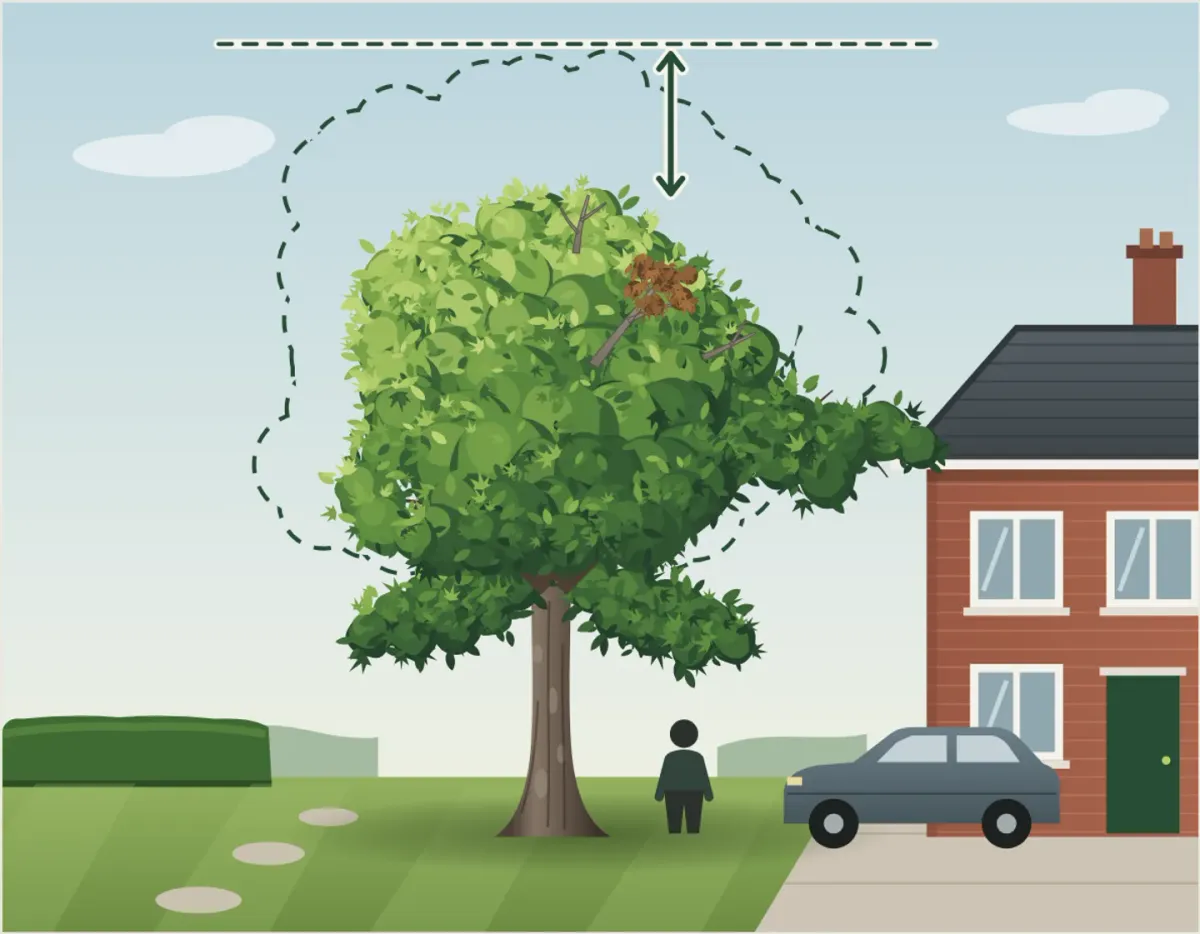
- The shapeA reduction keeps the tree’s natural outline, only smaller. A pollard has its own shape: short limbs, rounded heads and a mop of straight shoots.
- Where the cuts goA reduction cuts back to suitable side branches. Pollarding cuts back to the same knuckles every time.
- Which treesA reduction can be done on a mature tree that has never been cut. Pollarding is best started young.
- How oftenBoth need doing again in time, but a pollard has to stay on its cycle to stay a pollard.
Every few years
Keeping a pollard on its cycle
Once a tree is pollarded, it has to be kept that way. It needs cutting back to its knuckles every few years. How often depends on the species and how fast it grows: willow needs it more often than slower trees.
Leave it too long and the shoots grow into heavy branches, joined weakly round the knuckle, which can split off in wind. Keeping to the cycle matters more than the exact year.
Straight after cutting, a pollard looks bare: a trunk, short limbs and knuckles. Shoots grow from each knuckle in spring, and by summer it has a dense, rounded head of leaves.
Timing and permission
When to book, and what to check first
Pollarding is winter work for most trees.
- 01
Time of year
Pollarding is usually done in late autumn or winter, when the tree is dormant and the leaves are off. Spring, when the tree is putting its energy into new leaves, is the time to avoid.
- 02
Nesting season
Winter pollarding misses most of the nesting season, which runs from March to August. If work does fall in those months, we check the tree for active nests first, because nesting birds are protected by law.
- 03
Protected trees
Pollarding a tree with a Tree Preservation Order needs the council’s consent, and in a conservation area you give six weeks’ notice. That applies to an established pollard on its normal cycle too. Our protected tree check finds your council from your postcode.
On the day
What you’ll see while we work
Pollarding produces a lot of long, straight shoots, so most of the day is cutting and clearing them.
Ask about your treeWe agree the cut points
On an established pollard, every shoot goes back to its knuckle. On a young tree being started, we agree with you where the heads will form.
The shoots come off
Depending on the height of the heads, the cuts are made by climbing or from the ground. Each shoot is cut just above the knuckle, never into it.
We tidy up
The shoots are chipped or taken away, depending on what is in your quote, and the area under the tree is cleared as agreed.
Other crown work
Not quite what your tree needs?
If your tree is mature and has never been pollarded, one of these is usually the better way to manage it.
- Crown reductionA smaller tree that keeps its natural shape.
- Crown thinningA lighter, less dense canopy at the same size.
- Crown liftingHeadroom over a path, drive, lawn or road.
- Deadwood removalDead and broken branches out before they fall.
- All tree pruningEvery kind of work side by side, with our pruning jobs.
Useful answers
Before you get in touch
What is the difference between pollarding and topping?
Pollarding is planned. It starts on a young tree and goes back to the same knuckles every few years, so the tree builds a strong, compact framework. Topping is a one-off cut straight across the big limbs of a mature tree, which leaves large wounds and weak regrowth.
Can you pollard my big tree to make it smaller?
Usually not. Starting pollarding on a big tree that has never been pollarded means large cuts into old wood, and many trees don’t recover well from that. A crown reduction, done in stages if need be, is normally the better way to make a mature tree smaller. We’ll tell you honestly on the visit.
How often does a pollarded tree need cutting?
Every few years, depending on the species and how fast it grows. Fast growers such as willow need cutting more often than slower trees. Once a tree has been pollarded, it needs to stay on its cycle.
My tree was pollarded years ago and has grown out. Can it be pollarded again?
Often, yes, but with care. The shoots on an old pollard that has been left grow into heavy limbs, and cutting them all off at once can be too much for the tree. It is often safer to bring it back in stages over a few years.
Which trees can be pollarded?
Lime, willow and London plane are the classic pollards in the UK, and hornbeam, mulberry and catalpa are often pollarded in gardens. Most conifers, birch and cherry don’t respond well and shouldn’t be pollarded.
Will a pollarded tree look bare all year?
Only for a short time. Pollarding is normally done in winter, so you see the bare limbs and knuckles until spring. Then shoots grow from every knuckle, and by summer the tree has a dense, rounded head of leaves.
5.0 from 43 Google reviews
More reviewsRead the reviews on Google“Sharp Hedges came out today, they did a great job reducing our hedge and tidying it up.”
“Only a small garden job for my tree but the service by Sharp Hedges Tree and Garden Services was first class!”
“Excellent service. From the initial call to completing the job in less than a week.”
Ask about pollarding
Tell us about the tree
Send your postcode, the kind of tree if you know it, and whether it has been pollarded before. On WhatsApp, a photo of the whole tree and one of the top of the trunk and limbs is ideal. We work across County Durham and the North East.
What happens next
- 1We look at what you send.
- 2We clarify the job and, for most work, arrange a free visit.
- 3You get your quote, with no obligation.
We’ll look at the job details and reply between 8am and 8pm. If we need a closer look, we’ll arrange a suitable time with you.
Want to show us the job?