Tree pruning · Deadwood removal
Deadwood removal in County Durham
Get dead and broken branches out of a tree before they come down on their own. We take out what is dead or hanging, and leave the healthy crown as it is.
NPTC qualified · Fully insured · Free in-person quotes
You don’t need to know the trade name. Just tell us what you want to change.
Send photos of the branches on WhatsApp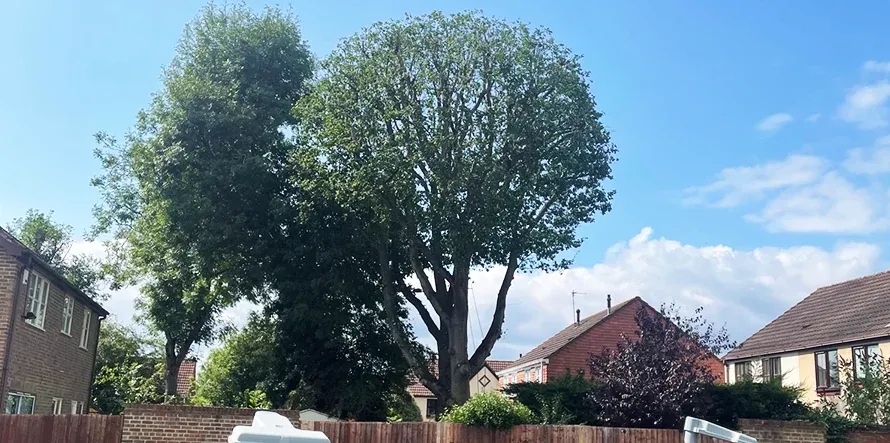
What deadwood removal is
Dead branches out, the living tree left alone
Every tree has some dead wood: lower branches shaded out by the ones above, twigs that have died back, a limb snapped in a storm. In a quiet corner of a big garden that is rarely a worry. Over a path, a drive, a roof or a play area, a falling branch can do real damage.
Deadwood removal takes out dead, dying and broken branches above a thickness we agree with you, along with any that are hanging loose. Nothing else is cut, so the tree looks the same afterwards, only tidier.
It is also included in every pruning job we do. When we reduce, thin or lift a tree, the dead wood comes out at the same time.
From the ground
How to spot dead wood in your tree
Look from a safe distance, and don’t stand under a branch that is hanging or cracked. If you are unsure, send us a photo and we’ll tell you what we think.
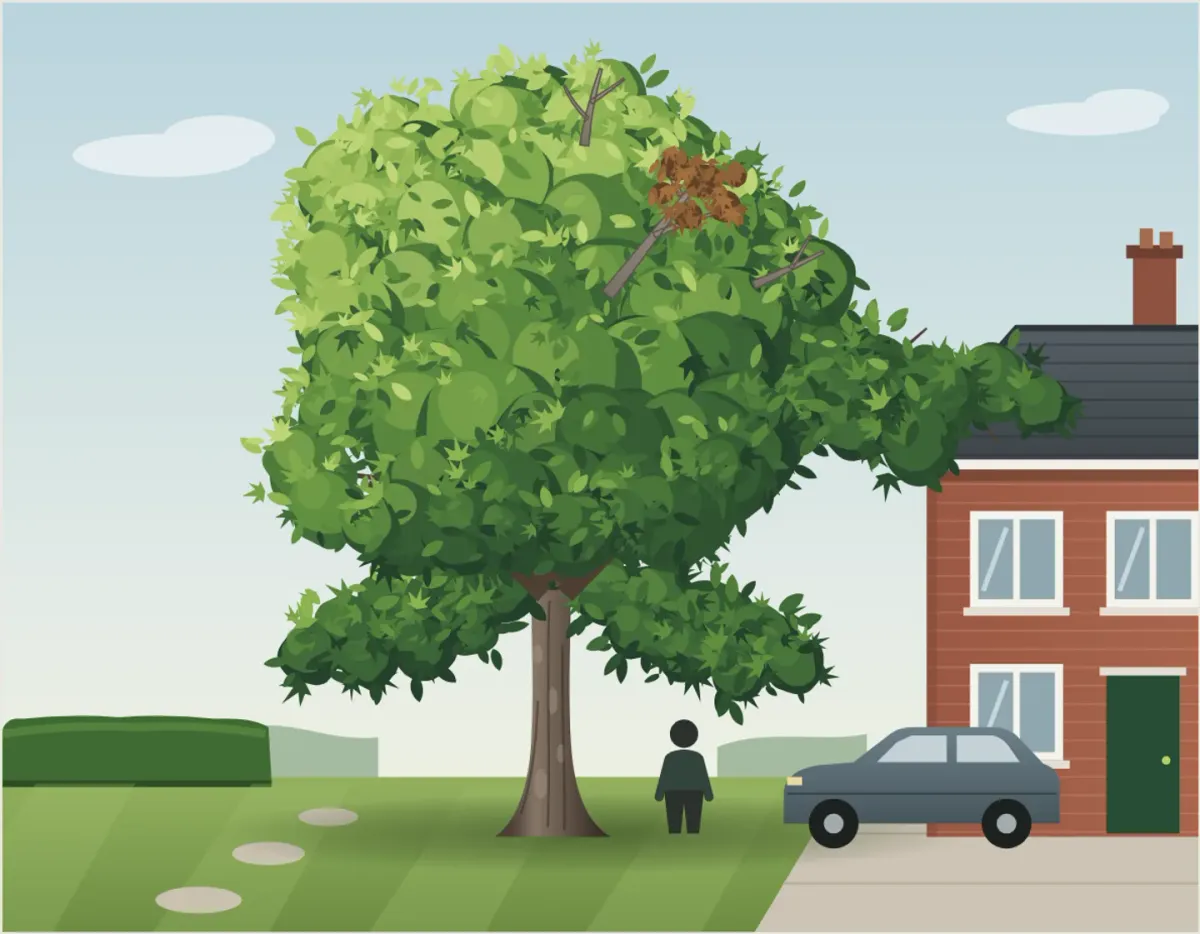
- No leaves in summerBranches that are bare, or hold brown leaves that never drop, while the rest of the tree is green.
- Peeling barkBark coming away in sheets, showing smooth, pale grey wood underneath.
- Hanging branchesSnapped branches caught in the crown after wind or snow, sometimes called hangers.
- FungusBrackets or toadstools on branches or at the base of the trunk, which can mean decay inside.
- Twigs on the lawnTwigs and small branches turning up on the grass after every breeze.
- Ash with thin, patchy leavesDead tips on an ash tree are often ash dieback, which makes the wood brittle quite quickly.
Is it the right job?
When deadwood removal is enough, and when it isn’t
Taking out dead branches deals with dead branches. If something else is wrong with the tree, it needs looking at as a whole.
Usually a good fit
- Dead branches over a path, drive, road, roof, greenhouse or play area.
- A branch snapped in a storm and is hanging in the crown.
- A healthy tree with some lower branches that have died off in the shade.
- A tree you otherwise like as it is, which only needs making safe.
Probably not enough on its own
- A large part of the crown is dead or dying. The tree may need a closer look, and removal may be the safer answer.
- Cracks in the trunk, a split fork, fungus at the base or a new lean. Those need looking at before anyone climbs.
- The tree is also too big or too dense. Dead wood comes out as part of a reduction or thin.
Not all dead wood needs to go. Dead branches in a quiet corner, away from people and buildings, can be left. They are good for insects, fungi and birds, and the tree does not need them taken out to stay healthy.
Afterwards
What the tree looks like when we’ve finished
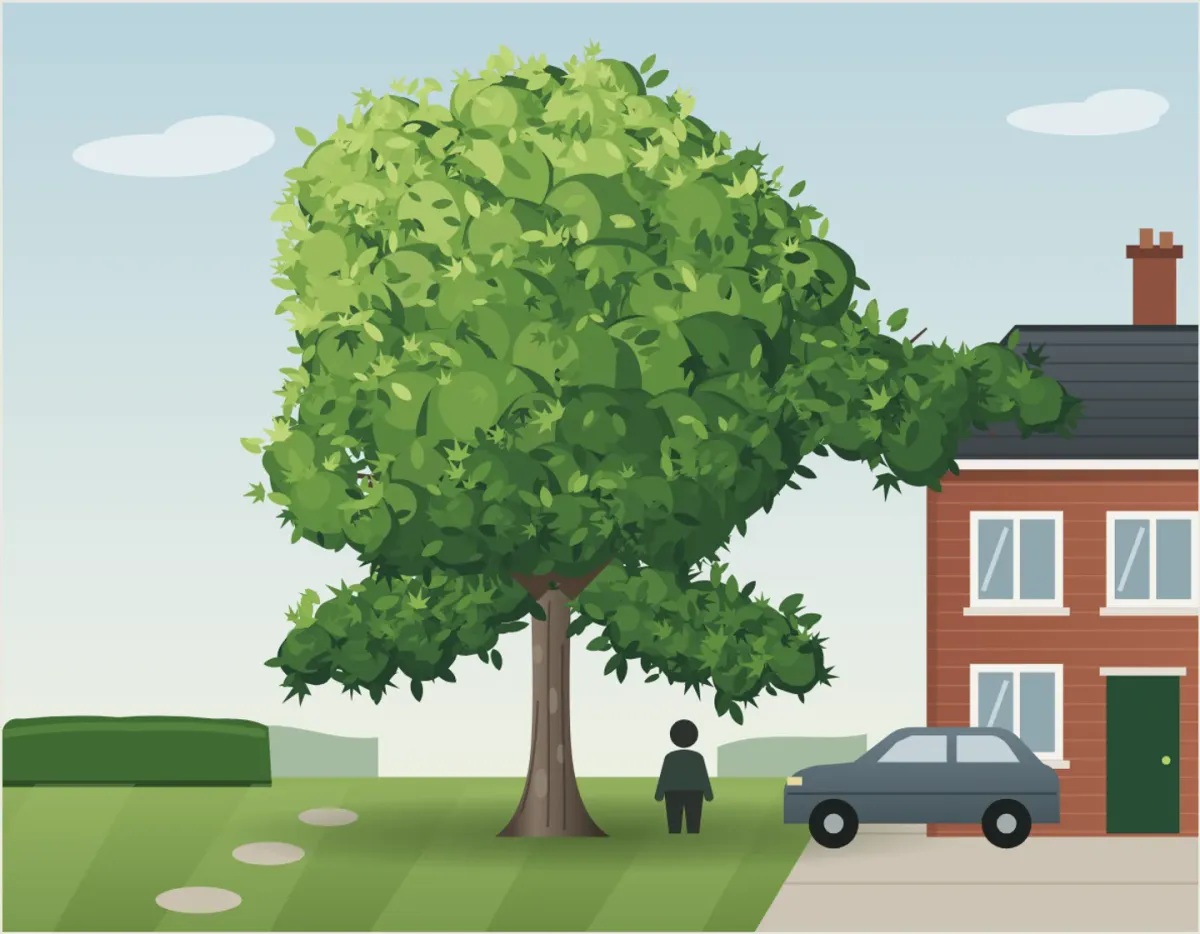
From the street, most people can’t tell anything has been done, which is the point. Look closely and the bare grey tips, brown patches, stubs and hanging branches have gone.
Close up, the cuts sit just outside the slight swelling where each branch joined, so the tree can seal them.
Over the years, dead wood builds up again slowly. On a tree over a busy path or a house, it is worth having it looked at every few years and after big storms.
Timing and permission
When to book, and what to check first
Dead wood can come out at any time of year. If a branch is hanging over a path or road, don’t wait.
- 01
Easiest to see in summer
When the living branches are in leaf, the dead ones stand out. In winter, dead and living twigs look much alike from the ground, so summer is a good time to have a tree checked over.
- 02
Birds and bats
Holes in old dead branches are used by nesting birds and roosting bats, and both are protected by law. Between March and August we check for nests first, and a branch with a hole in it gets a closer look before it is cut.
- 03
Protected trees
Taking only dead branches off a tree with a Tree Preservation Order, or in a conservation area, does not normally need the full consent or notice. The exemption is narrow, though, so if your tree is protected, check with the council’s tree officer first. Our protected tree check finds your council from your postcode.
On the day
What you’ll see while we work
Dead wood is often high up and spread through the crown, so this is climbing work from start to finish.
Ask about your treeWe agree what comes out
We go over the branches you are worried about and the thickness we are working to, and where the wood is going.
A climber goes through the whole crown
That way we reach the dead branches you can see from the ground and the ones you can’t. Dead wood can break unpredictably, so bigger pieces are lowered on a rope rather than dropped.
We tell you what we found
If we notice anything else while we are in the tree, such as a crack or fungus that can’t be seen from the ground, we’ll tell you.
We tidy up
Branches are chipped or taken away, depending on what is in your quote, and the area under the tree is cleared as agreed.
Other crown work
Does the tree need more than that?
If the tree is also too big, too dense or too low, dead wood comes out as part of one of these jobs.
- Crown reductionA smaller tree that keeps its natural shape.
- Crown thinningA lighter, less dense canopy at the same size.
- Crown liftingHeadroom over a path, drive, lawn or road.
- PollardingCut back to the same knuckles every few years.
- All tree pruningEvery kind of work side by side, with our pruning jobs.
Useful answers
Before you get in touch
Is dead wood in a tree dangerous?
It depends on where it is and how big it is. Small dead twigs fall harmlessly all the time. A dead limb over a path, road, car or roof is different, because dead wood turns brittle and can drop without warning, often in wind. If you are worried about a particular branch, keep people from underneath it and send us a photo.
Does removing dead wood help the tree?
Not much. Trees shed dead branches naturally and seal them off, so taking out dead wood is mainly for safety and tidiness rather than the tree’s health. The exception is a broken branch, where a clean cut seals better than a torn stub.
Who is responsible if a dead branch falls from my tree?
Generally the owner of the tree, if the danger was something they knew about or should reasonably have noticed. This is general guidance, not legal advice, but it is a good reason to deal with obvious dead wood over paths, roads and the neighbours’ property.
My ash tree has dead branches. Is it ash dieback?
It might be. Ash dieback is a fungal disease found across the country. Signs include dead tips, thin, patchy leaves in summer and dark patches on the bark. Infected ash wood turns brittle, so dead branches over paths or roads should be dealt with sooner rather than later. Send us photos of the whole tree and the affected branches.
Can you take out broken branches after a storm?
Yes. After a storm, look for snapped branches hanging in the tree and keep people away from underneath. If a branch is touching an overhead power line, don’t go near it and call 105. For anything else, send us photos and tell us what is underneath.
How often should dead wood be taken out?
There is no fixed rule. A tree over a lawn may never need it. A large tree over a house, a road or a busy path is worth looking at every few years, and after a big storm. We’ll tell you what we would suggest for your tree when we see it.
5.0 from 43 Google reviews
More reviewsRead the reviews on Google“Sharp Hedges came out today, they did a great job reducing our hedge and tidying it up.”
“Only a small garden job for my tree but the service by Sharp Hedges Tree and Garden Services was first class!”
“Excellent service. From the initial call to completing the job in less than a week.”
Ask about dead wood
Tell us where the dead branches are
Send your postcode and a photo of the whole tree, plus a close-up of the branches you are worried about if you can take one safely. Tell us what is underneath them: a path, a car, a roof. We take out dead wood across County Durham and the North East.
What happens next
- 1We look at what you send.
- 2We clarify the job and, for most work, arrange a free visit.
- 3You get your quote, with no obligation.
We’ll look at the job details and reply between 8am and 8pm. If we need a closer look, we’ll arrange a suitable time with you.
Want to show us the job?